Tuesday, November 27, 2012

Between the Lines


Tonight I will slip into a bed smelling of sunshine and fresh air.

Nothing is better than freshly laundered sheets dried outdoors.

When we moved to this house, it did not truly feel like home until we had erected a clothesline. Until that time, each load of laundry filled me with a yearning for a clothesline... especially when I washed the bed sheets.

The fragrance of line-dried sheets is one I remember from childhood. While I did not quite appreciate the roughness of line-dried bath towels, I loved the smell of freshly washed, line dried sheets. Most of our clothes were dried on the clothesline for much of my younger years.

Perhaps that is why I have almost always made sure I had a clothesline wherever I lived, even if I had to string the line between two conveniently spaced trees. That and the fact that I hated spending money and time waiting for clothes dryers at the laundromat.

If my love for the clothesline and the sense of "home" it gives me comes from my childhood memories, then most of today's children won't know that special comfort of settling between freshly washed and line dried sheets. They won't know the simple pleasure of hanging clothes on the line.

Today, many homeowner's associations don't allow backyard clotheslines because they are not aesthetically pleasing. But I find nothing more aesthetically pleasing than clothes hanging on the line.

It is a simple pleasure. I love hanging clothes on the line, even on chilled days like today, when the breeze had a little bite to it. Nothing pleases me more than watching the sheets and towels flap in the breeze... feeling the coolness, or heat of the dried clothes as I take them off the line... bringing in a basketful of sun- and wind-dried things.

A simple pleasure. Like running and playing hide and seek among the trees. Climbing a stack of straw bales. Dress-up parades through the garden. Picking berries and eating snap peas fresh off the vine.

Simple pleasures are better than anything.

Pass it on.

Saturday, November 24, 2012

Sparrow Grass

Frost-covered asparagus on an autumn morning.

"Faster than cooking asparagus."
That phrased was coined about 2,000 years ago by Roman Emporer Augustus to describe quick action. Of course, originally it would have been in Latin.
In those days, asparagus was something on the wealthy could afford to serve, and they valued it highly. Those ancient Roman emporers retained entire fleets of ships simply to transport this delicacy.

These days, asparagus can be on anyone's table, although a pound of organically grown asparagus will set you back five or six bucks. If you have a little garden space that you can devote to a perennial crop, however, you can have your own asparagus for little effort.

Asparagus remains a highly favored delicacy, although it fits in almost anyone's budget. Asparagus season is a mere two months plus two weeks long, and the fresh stuff is highly superior in flavor to canned or frozen asparagus. In Europe, asparagus season is eagerly awaited and celebrated with asparagus festivals (called "spargelfests" in Germany). Some places in the U.S. also have such festivals.


My single asparagus bed, containing 20-plus plants, provides more than enough spears to satisfy any craving the two people in this household may have, plus some to give away. In spite of the much warmer than normal and dry spring, the asparagus patch produced probably as much as it did the previous year.

The asparagus in our garden is "Purple Passion," which produces rich red-purple spears. These spears frequently are about an inch in diameter, and sometimes look rather intimidating. When my sister asked how I got my asparagus so big, I would just shrug. All I do is give it compost or horse manure in the fall after I cut it down, then mulch.

Now I learn that purple varieties of asparagus naturally produce large spears. Which is kind of disappointing -- to learn that I don't actually have a magic touch with it. Purple varieties also tend to be sweeter and have less fiber than green varieties.

Often, those giant spears will curl and deform, creating rather monstrous looking things. The curling and bending is due to mechanical damage -- either you nicked it a bit when using a tool to weed, or some buggy critter chewed on one side a little. The curve goes toward the side where the damage is.

Some people complain that eating asparagus makes their urine smell bad. At one time, it was argued that people differed in the way their bodies processed asparagus, so that some had smelly urine, while others did not. Studies have shown that this is not the case. Pretty much everybody excretes those smelly compounds. It is simply that the large majority of us do not possess the gene that allows us to smell it.

Smell or no smell, asparagus is highly nutritious, and a good source of many vitamins and minerals, including folate, and was once considered a medicinal herb.

Asparagus has been around a long time. Ancient Egyptian friezes thousands of years old show people making offerings of asparagus.

However you like it, lightly steamed, roasted for a brief period, sauteed or in soups, asparagus is good for you, and an easy perennial vegetable.

Friday, November 9, 2012

Oh, Deer

Winter is closing in.

Today and Saturday will be quite lovely, late spring-like days. Tonight's low is set at 60.
Sunday's high is in the mid-50s. Monday will make it into the low 40s.

On Saturday I will pull the inner row cover over the lettuce and broccoli. On Sunday, I will add some extra protection by throwing old sheets over the low tunnels housing the lettuce. Lows will be in the mid-20s for several days this coming week. Now comes the time when keeping things not just alive, but in good condition requires awareness of the weather. I should probably give serious consideration to replacing the row cover on the low tunnels with plastic. Easier yet, just throw the plastic over the row cover.

Lots of tender lettuce has yet to be harvested. This past week, we've eaten some very fine broccoli, fresh from the garden. I hope the plants will produce side shoots. The cabbages, etc. seem a bit slow this year. And I am wondering if I will get cabbage or cauliflower at all. The brussels sprouts are very close.

Next year, I might start some of the cabbages, broccoli and cauliflower a couple of weeks earlier, to ensure that they head out before it gets too cold. Sept. 1 plantings worked just fine for a couple of years. This year, I'm beginning to wonder.

Oh yes, here are some rather blurry photos of some of the deer who tramp through our woods and munch on things in my garden. The photos are blurry because the camera wanted to focus on the trees in front of the deer and I was in too much of a hurry to think about setting it on manual focus. They rarely show themselves when I can quickly get the camera, or when there is enough light to get a good shot. Not that these are good shots, but they are something.

Even though the deer munch my strawberry leaves, chew down the cover crops and rend the elderberry shrubs down below, they are beautiful creatures and I enjoy their presence.

Tuesday, November 6, 2012

Hello Again!

The sumac has lost its leaves since this photo, but I had to post it anyway.
The Wheel keeps turning.

I just checked the seven-day forecast. After a couple of days with highs in the 70s (and one night with a low of 60!) the weekend calls for a good chance of rain and (get this) snow.

Yeah. Snow.

It is November.

The other day I said that I wouldn't complain at all about snow this winter.
Because we need the moisture.

I am not sure that I am quite ready for snow yet, though.

Can't stop it, though.

One of the things I have enjoyed doing on some of these chilly mornings is making jam.

Two or three weeks ago I finally released the bell peppers to go where all good little plants go, eventually. The compost heap. After I picked all of the peppers, that is.

That meant I had peppers for making hot pepper jelly, which is mostly bell peppers, with just a few hot ones thrown in according to the heat level that you'd like. Last year's batch (which we still have several jars of) came out super hot. This year's batch, not so hot. So we'll just open one of each and mix them. Poifect!

I've also pulled jars of elderberries out of the freezer for elderberry jam. When it is all done, I will have more than I made last year, but not as much more as I thought I might have.

Anyway, here are my very own recipes. I use Pomona's pectin because it is an all natural pectin and I can adjust it for any size batch that I want. While most packaged pectins say not to make double batches (I've tried, they frequently don't gel properly) I have had no trouble with double batches using Pomona's. While a box of Pomona's is more expensive than the others, you don't use the whole package for a single batch. I can get three or so batches out of one package, depending on what I am making, as some types of jellies and jams use different amounts of pectin.

Naked trees in the golden light of sunset.
You also can make your own pectin by boiling down green apples... That's all I know about that, and I know that much only because one of my neighbors told me that she did it.

Ok. On to the recipes.

Pepper Jelly
3 ½ cups pepper puree (bells and hot peppers)*
2 cups cider vinegar
½ cup lemon juice
1 ½ to 2 cups honey (or 2 ¾ cups sugar)
5 teaspoons calcium water
4 teaspoons pectin powder

Mix pepper puree, vinegar, lemon juice and calcium water in a large saucepan. Bring to boil. Blend pectin in with honey or sugar. When liquid is boiling, add honey (sugar)/pectin mix and stir vigorously for 1 to 2 minutes to dissolve pectin. Bring to boil, then remove from heat. Fill hot, sterile jars and cap tightly. Process in boiling water bath for 10 minutes (half pints) or 15 minutes (pints). Makes 3 pints or 7 half pints.
*From 1 ¼ to 1 ½ pounds of whole bell peppers, green or colored. I used two jalapenos with seeds removed, but did not remove pith or ribs, but that was not hot enough. I will try 3 or more jalapenos next time. Other hot peppers can be used, according to availability and your taste.

Elderberry Jam
4 cups processed elderberries*
1/3 cup cider vinegar or ¼ cup lemon juice
¾ teaspoon cinnamon
1/8 teaspoon cardamom
¼ teaspoon nutmeg
Pinch of clove
4 teaspoons calcium water
1 cup honey
3 teaspoons pectin powder
Mix elderberries (measured after processing out seeds), vinegar or lemon juice, seasonings and calcium water in large saucepan. Bring to boil. Blend pectin with honey. Once liquid is boiling, add honey/pectin blend and stir vigorously for 1 to 2 minutes to dissolve pectin. Bring to boil and remove from heat. Fill hot, sterile jars and process in boiling water bath, 10 minutes for half pints, 15 minutes for pints. Makes 5 half pints.
*I have found that processing out the seeds, with a hand cranked food mill, is easiest when you freeze the berries, then thaw and process. I use to cook the berries, cool and then process, but that takes more time. And I think that the double cooking (since you need to heat the juice again before canning) destroys some of the flavor and nutrients. Both cooking and freezing break down the berries and makes them easier to process.

Thursday, October 18, 2012

To Fry or Not to Fry

“Give me all you can spare.”
I giggled insanely when I read that e-mail.
All I can spare? Does she even realize?

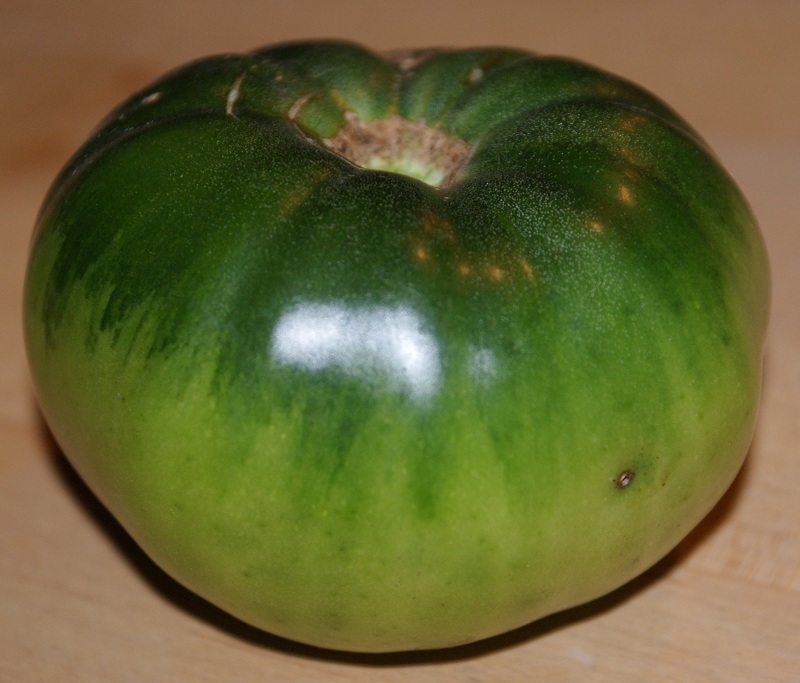
The first weekend of October brought our first freeze -- not just a frost, a freeze, a hard one. The tomatoes were not producing much of anything but green tomatoes, so I did not try to save them. However, I did pick about half a bushel of green tomatoes. Someone could use them. I knew she had been delighted to receive green tomatoes last year to make picalilli. I knew she wouldn't use half a bushel of them, but I had them delivered to her anyway.
 
Half of them were returned to me.

Fortunately, someone said he would use a few in spaghetti sauce – he likes the tartness. Someone else said she wanted to try some fried ones. She took a couple.
“What about salsa verde?” I asked before she could escape.
“Can you make it with green tomatoes?”
“You can try.”
So I gave her a few more. The next day I found a recipe online for salsa verde made with green tomatoes, and sent her the link.

The rest of the green tomatoes, which were few, went into the compost heap. I've still got pickled green tomatoes I made last year.
Well, ok, I salvaged a couple and had them with lunch. I sauteed some vegetables with a nice curry seasoning and added the green tomatoes and a ripe one. Tasty.

This Web site offered 25 green tomato recipes, including the salsa verde recipe. Here is another site with recipes and this one has interesting variations. And yet one more. They start looking alike after a while, mostly battered and fried, or some sort of pickle or relish. Of course you have to have green tomato pie, as well.

This is the recipe I created last year to make pickled green tomatoes.

My Pickled Green Tomatoes
3 cups organic apple cider vinegar
1 tablespoon pickling salt
4-5 cinnamon stick
10-15 whole cloves
8-10 whole cardamom pods
15 cups, more or less, green tomatoes, sliced, quartered, chunked, however you like

Combine vinegar, salt, cinnamon, cloves and cardamom in a large saucepot. Heat to boiling and let cook for a few minutes. Remove spices and put 1 cinnamon stick, 2-3 whole cloves and 2 cardamom pods in each jar. Add tomatoes to vinegar and simmer 5 to 10 minutes. Quickly pack hot, sterile pint jars with tomatoes, then fill with vinegar to ½ inch from the top, making sure liquid covers all the tomatoes. Clean rims and cap each jar. Process in boiling water bath for 5 minutes. Makes 4 to 5 pints.


Tuesday, October 16, 2012

Peck of Peppers, more or less


The peppers are done, for the most part. The flower gardens look rather bare. The tomatoes stand withered and browned by frost.

It is the middle of October and we have already experienced two freezes. Not just frosts, when the temperature might actually remain above the freezing point, but freezes. And the thermometer did not simply dip down to the freezing point, but actually fell into the 20s (Fahrenheit). Below 28 degrees is considered a "hard" freeze. Both of the freezes fell hard.

Sigh. I kind of thought that after this hellish summer we would get a late first freeze. Instead, it comes early and hard.


I went into the attic above the garage and brought down the sheets and blankets I use to protect things from frosty temps. The peppers, watermelons, one hill of cantaloupe and half of the pole beans got covered. I'd decided to let the tomatoes go. Draping sheets over pole beans is a bit more difficult than just throwing them over shorter plants, but I managed.
I should have saved myself the trouble. The beans bit the dust during the first freeze, in spite of being covered. Twenty-eight degrees F. was just too much. The peppers looked pretty singed, but alive. Both of the melons were covered with heavy blankets, not just sheets, so they fared a bit better, but still had some singed leaves.

Then I cut a few flowers, very few since many of them got burned a little by a near-freeze frost the day before.

After that night the forecast looked safe. No frosty weather in the outlook. I ignored the dead things in the garden (although my energetic husband spent an afternoon tidying up while I was in town for a meeting). I had a five-day camping trip at a music festival to plan for. Then two days before we were to leave, less than a week after the first freeze, the forecast called for another near-freeze -- 33 degrees, too close for comfort -- on the night before we left. So I covered the peppers and melons again. When I got up the next morning, the thermometer said 26.
Fortunately, we left late enough that it was safe to pull the covers off of everything. Things had survived, sort of. But we had a music festival to go to. The two brightly colored zinnias I had salvaged before that first freeze were still bright and fresh, with their accompaniment of lavender mint, so they graced our camp table at the festival.
 

Today, I cut up the pepper plants and added them to the compost heap. The Thai chilis, the King of the North red bell pepper and most of the Orange bells. Four of the orange bells looked healthy enough to support the large green peppers they bore, so I decided to let them ripen. Now I have a large basket full of green bell peppers and a two or three dozen bells with at least a little color on them. I also picked a few small, ripe watermelons.

The Kansas cantaloupe has a few smallish melons ripening on the vine. I cover the near-ripe ones with plastic buckets weighted with rocks to thwart melon thieves. Last night I went out the back door and spied a melon-thieving oppossum waddling away.

The summer garden is winding down. Yet bounty is to be had. Today I pulled some large red radishes. We are feasting on kale and lettuce and waiting hopefully for cauliflower, broccoli, cabbage and brussels sprouts. With care, many of these things will last well into winter.

It seems odd to be suddenly in the midst of autumn.

Sunday, September 30, 2012

Autumn Arrives


White ash -- a hardwood favored for baseball bats.

The Summer that I Thought Would Never End is over.
We celebrated the Autumn Equinox last weekend, so it is officially Fall.

But that is not what put an end to the Summer that I Thought Would Not...
For the past month or so, the weather has been much cooler. Not just cooler, but downright chilly at times. Now I wait until late in the morning to head to the garden -- so that it will have warmed up a bit.


Virginia creeper climbs a walnut tree.
Rain remains scarce, but the cooler temperatures mean that plants transpire (lose water) much less than they do when it is hot.

The woods surrounding me are rife with color. Red flames climb many of the trees... red flames that are Virginia Creeper, mostly. I am glad that only a few of the vines climbing the trees are poison ivy. However, Poison Ivy burns lower, at the edges of the woods. Both are a wonderfully rich scarlet.

The beautiful orange-yellow of what I have now identified as a white ash tree glows among the yellowing green of the elms and walnuts. As the leaves begin to fall from these trees later in the season, the oaks and sycamores and others will put out their autumn colors.


Poison ivy in its autumn glory.
The hours around sunset are gloriously beautiful. I have made a point these last few days to wander out at about that time (6:30 or so), as the sun sinks lower and the golden hue to the light enhances the glorious color in the woods.

With the cooler temps, and the little bits of rain we've had, the garden has rebounded. The cantaloupes, which I thought were about done when August hit, now have little melons. The Kansas variety has produced a number of ripe ones. They are small, but....


Leaves and berries of Bristly Greenbrier in the woods.
The cantaloupes disappointed me this summer. I don't know what it was, but the flavor just wasn't what I had come to expect. So I did not expect much from these little late ones.
I cut open the first one to ripen and caught a whiff of a delicate fragrance.


Then I ate one and an oh-my-God sweet deliciousness filled my mouth and forced me to consume several more pieces. What a wonderful treat at the end of the summer that I feared would not end.

The green beans have rebounded, as well. I can pick a small basketful every other day. A couple of weeks ago I wrote my newspaper column on green beans, because of this rebound. I had intended to write more about them here, but was getting ready to attend a four-day women's retreat and didn't get around to doing it. I have now forgotten what else I had wanted to say about beans. The varieties I have growing right now are pole beans -- Lazy Housewife, Ideal Market, and Blue Lake.

Bumblebee at a bean blossom.

The bumblebees are taking advantage of the bean blooms and make quite a ruckus while working there.


The flower gardens also have come to life, celebrating the change of season with colors that seem exceptionally brilliant.

And one of the apple trees has decided to put on a few blooms.

Nature just gets curiouser and curiouser.