Tuesday, January 31, 2023

Sweet, Sweet Potato Slips


Flowers of the sweet potato vine. Yes, they do look like morning glories. The two are closely related. Both are species of Ipomea. However, morning glories are somewhat toxic, and every bit of the sweet potato plant is edible.

Get ready, set, 

Start! Sprouting, that is.

Last week I put my "seed" sweet potatoes in a paper bag and set them in a warm spot for the "pre-sprouting" process. About the middle of February I'll pull them out of the bag and put them in soil. You can lay them in flats or place them vertically in pots and cover lightly with damp soil. Set them in a warm, bright location and wait for the sprouting to begin -- if it hasn't already started during pre-sprouting.

When the sprouts are six to 12 inches long, cut them free and root them in either water or soil. You can plant them straight into the garden soil, if it's the right time of year. The sweet potato is a tropical plant, so the weather and soil must be warm. 

Last year I started planting sweet potatoes in mid-May (I'm in Northeast Kansas), but can wait until late June. These were robust, rooted slips purchased from a local nursery. I also planted slips ordered from Kansas State University research garden. Those slips don't arrive until sometime in the first two weeks of June, and they are not rooted. While they can be directly planted in the garden, I feel better if I root them first. It is best to root them in pots of soil, rather than in a jar of water. If you root them in water, don't crowd them or cover a lot of the stem with water, as that will encourage rotting. I also ordered some slips from a seed company. They arrived late and were in poor shape due to being shipped during the hottest days we had last summer. I put them in a pots of soil and many of them survived.

This is the first time I've tried growing my own slips. I bought organic sweet potatoes from the grocery store because we've eaten all of the white-fleshed sweet potatoes I grew last year. They must be organic, as conventionally raised ones often have been sprayed with something to prevent sprouting. I will still buy some from the nursery and K-State this year, but the ones I got from the grocery store are different varieties. I will keep you posted. 

Once you've planted the slips in the garden, water them regularly until they are well established. I often water the newly planted slips daily, especially since I'm often watering new seed beds daily at that time.  Hot sun can stress the slips and delay their recovery, so I like to shade them a bit by suspending shade cloth over the beds. And I put up temporary fencing because the rabbits and deer find the leaves much to their liking.


Once the slips are well established, you can almost ignore them, except to water in long, dry periods -- and pruning the vines so they don't cover the entire garden. I've rarely had to water mine. However, in really loose, quickly draining soil, they will need regular watering. 

When pruning the vines, go ahead and eat the leaves. The younger ones are tastier and more tender. Cook them or eat them raw. The vines produce a milky sap, but don't let that worry you.

In late September to just before the first frost in October, I will start digging. Don't leave them until after frost or the soil starts to cool a lot, as that will damage your tubers. 

For more information on a sweet potato expert, check out this video from the Douglas County Extension Master Gardeners YouTube channel. It's from the advanced education segment that followed one of our meetings.

Saturday, January 21, 2023

Winter Study

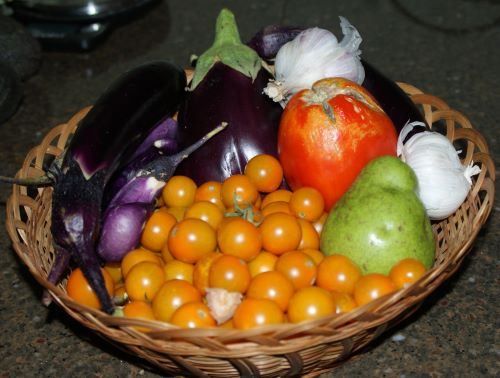
Winter. Baskets of bounty are a thing of the past season.


In the midst of winter
And the garden is so bare.

So what do I do now?
Stand out there and stare?

Now's the time for study,
To learn about the plants.
Then when spring comes
You'll be all out of can'ts.

Because you can.

That's what I say.
Check out these educational links
And learn some more today.

Then head down to the library
To find yourself some books.
Gardening just isn't 
As hard as it looks.

You can do lots in the winter... like, study. Head on down to the library and check out a bunch of books on various garden topics. If you're planning to save seeds from your garden this year, look for "The Seed Garden," published by the Seed Savers Exchange. You'll learn how far apart to plant different varieties of almost every vegetable so you get clean genes, as well as many other tips on seed saving. 

"The Organic Gardeners Handbook of Natural Insect and Disease Control" is a great book for troubleshooting garden issues. 

If you'd like to check out insect material, look for "Bees, Wasps, and Ants," by Eric Grissell. A really lovely book to read if you have any interest in honeybees is "Sweetness and Light," by Hattie Ellis. Also look for "Letters from the Hive," by Stephen Buchmann, and "The Hive," by Bee Wilson.

There are so many books on gardening that it is impossible to list them all. These are just a few on my bookshelf that I like to go to from time to time. Comment with your favorite book about gardening and how the rest of nature impacts your garden.

Lots of material also can be found online. Kansas State Research and Extension has an online "bookstore" from which you can download for free numerous publications. During the pandemic, K-State also started producing a monthly online event call the Garden Hour, at noon on the first Friday of each month. You must register to receive a link to access the live broadcasts, but you can find previous episodes on the Garden Hour Archive. 

Also during the pandemic, my Extension Master Gardeners group created a YouTube channel where we now post recordings of the educational presentations that follow each monthly meeting, as well as a few Speakers Bureau videos, short, educational videos by individual Master Gardeners. We also developed a more extensive Web site that includes upcoming and past activities, as well as blog posts about various topics.

Counting seeds and conducting germination tests on them is another winter activity. I went into detail on how to do a germination test in a Barefoot Gardener post last year. The next post detailed results.

I will try to post, from time to time, links to other sources, as well as helpful books. Mother Earth News is a good place to look for information, as well, both the hard copy magazine and online blogs.

Remember, winter is a time for rest, though. Don't get too caught up in being productive. Study and rest.

However, it is time to start transplants for onions, leeks and cabbage, as well as to start sprouting sweet potatoes for slips, which I will discuss in my next post.


Thursday, January 19, 2023

The Apples of My Eye

 Apparently, yesterday (Jan. 17) was a traditional date for wassailing the fruit trees.

I missed it again.

I don't know what is magical about that particular date, so do your wassailing whenever it suits... but in winter.

For those of you not familiar with this tradition, wassailing the fruit trees means having a party and parading through the orchard, banging drums, pots and pans, cymbals or making any other kind of raucous noise, presumably to scare away evil spirits that might harm the trees. Or maybe it's to wake up the trees. It's not clear. Then you select the main tree, or the most productive one and pour hard cider (preferably made from the recent harvest) on its roots, blessing it. You and your entourage must have cider, too. In some traditions the poorest tree would be threatened if it didn't shape up. I'd prefer to give it kind words and extra fertilizer. Sometimes toast is hung from the tree branches. I don't know why toast. It's just a thing that's done. Whatever, whenever, make it a party... even if it's just for you and the trees. Have fun. Hug the trees.

The prettiest apples from this past year's crop.

It seems more than coincidental that wassailing falls in the midst of pruning season for apple trees. A couple of weeks ago we spent about a week pruning ours, one tree a day. We've still got a couple more to do, but that needs to wait until some more urgent projects are taken care of -- like cutting firewood for next winter. We've got until March to finish the pruning. Other fruit trees are pruned at a different time of year.

Pruning goes much easier when two people are working on the same tree. One of us pruned from the ground, while the other climbed onto the ladder. When one of us was uncertain about whether to make a cut here or there, we had a second opinion readily available.


Our homegrown apples are all gone, except for those I made into apple butter. Apple butter is very simple to make, especially with a slow cooker. I used my 5-quart slow cooker, but any size will work, depending on how many apples you have. 

The most time-consuming part for you is cutting up the apples -- especially when they are as dinged up and chewed up as ours were. Slice, core and chop the apples, no need to peel. Fill the slow cooker to slightly mounded, but so the lid will stay on. Add seasonings, if you wish. I added a teaspoon or two of cinnamon to my recent batch, but I don't always add spices. Our apples were a little on the dry side, so I added about a cup of apple juice. However, I have made apple butter without the apple juice. Turn the slow cooker on high for about an hour or so, until you see the apples begin to cook down, then turn to low. Then leave them be, except for an occasional stir, for eight or 12 hours, until it's as thick as you want it. At some point, you'll want to crack the lid to allow moisture to escape. That will allow it to become really thick. 

I canned this year's batch of apple butter, but I often just put it in small jars and freeze it. Canning it requires the addition of lemon juice (but, oops, I forgot it) and the extra steps of  processing. Fortunately, it can be processed in a boiling water bath.


Another way we use a lot of apples, besides fresh eating, it to bake them, freeze them, and use them in cobblers and crumbles (we haven't discovered a way to may a serviceable pie crust, or there would be pie, too). After baking the apples, we put them in the pans in which we'll bake the cobblers and freeze. We release them from the pan by setting it in a little hot water and turning it upside down on a cookie sheet. We the stick it in the freezer to harden the slightly thawed bottom, then wrap in waxed paper and stick them in a plastic bag in the freezer.

 Then we can put together a cobbler or crumble at short notice, by taking out the formed apples and setting them in a baking pan. (BTW, they are really tasty when still frozen.) It doesn't take long for it to thaw enough to add the topping and bake. Please feel free to adjust seasonings and such in the following recipe to suit your taste.

Baked Apples
Approximately 4 quarts of cut up apples
½ cup brandy, apple juice, or water
1 heaping teaspoon cinnamon
1 heaping teaspoon ground ginger
1 teaspoon nutmeg
1/8 teaspoon cardamom
 
Mix seasonings with brandy and pour over apples in a large bowl. Toss until apples are well coated. Put in baking dish; cover. Place in preheated 350-degree oven for 1 hour or more, until very soft.

Put in dishes in which you want to freeze them, or cool a bit, top with crust of your choice, and bake.
Deeelicious.

 Up next: Wintering and sweet potato slips
To be followed by more recipes!

Wednesday, December 28, 2022

Fire Tale


Sometimes things don't go as planned.
Or maybe they go as planned, but not quite the way you thought.
For weeks we contemplated the task of burning some brush piles in a grassy area north of our house and garden. Over a couple of years my husband has pruned up a lot of trees, most red cedars, and piled the limbs in that grassy area because it was out of the way and not really visible.
We had planned to eventually burn it, but it was not a priority until recently.
This past fall we decided to install a bank of ground-mount solar panels before our electric company met its net-metering maximum -- which is appeared it would meet sometime in November.
After considering a couple of other locations, this spot north of everything seemed the most ideal, given our choices. (The most ideal spot, in truth is an open area a little closer to our house, but it's the most open area because it's over our lateral field.)
So we had to get rid of the brush piles and some standing woody invasive plants before installation. We had already decided to postpone the installation to January, but knew there was no way we could be guaranteed appropriate weather for a burn if we waited.
We needed a perfect day for the burn, i.e. "not windy." Stiff winds are never good for a burn, but our site added a little extra anxiety because the brush piles sat in tall, dry grass with a substantial grove of large cedar trees looming too close for comfort. If you've ever seen a red cedar tree burn, you know why we were concerned. They go up whoosh. If the fire got into those large trees, it would have been hot and furious. No way would we be able to push it back on our own.
We contacted neighbors asking for help with the burn. The area is small so we didn't need many. Four volunteered. Six of us should easily contain it, barring any unexpected gusts of wind.
We watched the weather forecast and a Sunday three weeks ago appeared to be, not ideal, but workable. The high was expected to reach into the 40s and air calm winds. We told our volunteers the burn would begin at 11 a.m. and promised them a hearty lunch after.
We prepared -- rather, my husband did. 
My husband, the wizard, conjuring fire.
He gathered together several pairs of old jeans with which to beat out any escaping flames. All volunteers were asked to bring hand sprayers to douse little flames. We strung more than 200 feet of garden hose from our outdoor tap to the burn area and began by spraying the mowed fire break, making the short dry grass less appetizing to hungry flames and prevent fire from creeping toward the cedar trees. 

We had found two old cans of camp fuel (essentially, gasoline) in our garage and decided to use that to get things going fast. My husband dumped some on one of the brush piles. A match was struck and, fwoomp -- fire. 
But it didn't last long. Once the fuel was burned, little fire was left. The dried grass burned slowly, if at all. 
Contrary to our fears, the fire was not in danger of blazing out of control, things didn't burn easily.
It was maybe a little too cool, a little too damp, and a little too calm. The brush piles were not very dense and just didn't burn. 
We kept trying, though. Eventually we started consolidating the piles. I kept trying to light grass and some piles of dried garden debris near one of the smaller piles. A slight breeze sprang up, giving breath to the flames and sending them toward the wood piles.
The burn took a little longer than we anticipated, but we didn't have a blaze in the cedar trees.
And our volunteers were well-rewarded for their help with a hearty chicken soup lunch topped off with not one, but three kinds of desserts.
We are grateful for helpful neighbors.


Thursday, November 17, 2022

Brief Snowy Wonderland


This happened a couple of days ago. White stuff fell overnight, disguising the brown winter shades. By late afternoon the above-freezing temperature and intermittent sun had wiped it all away, except for a few shaded patches.


The next day I was out weeding and turning compost. 

Tonight we'll huddle deep in our warmth against an overnight low in the mid-teens Fahrenheit. We'll have a few days of that, with one day not even breaking the freezing mark for the high. 

On Monday it might be almost springlike, with a high in the 50s. 

Ah, this fickle weather.

I had hoped to keep a few things going in the garden... kale, lettuce, cabbage, radicchio... but the extra cold forced me to bring it all in. In times past, the teens waited until December, but we can no longer count on what used to be considered "normal." (Pssst. It's climate change.)

Yet, I will persevere and adapt however I can. It's all I can do. As climate change surges ahead, adaptability will mean the difference between some success and total failure.

I have not preached on climate change, but I am very aware that it is here. I want you all to be aware, as well... not terrified, that has no value, but aware. We can do something.

I suggest checking out the Cool Block program. It was designed for urban communities, but we and some of our neighbors have been trying to adapt it to the rural setting. Our biggest challenge has been that most of us have already done a lot to decrease our carbon footprint, so the program seems a bit redundant. However, we have found value in the stronger sense of community we have developed among us. And we are adapting the curriculum to suit our particular group and circumstances. The part on emergency preparedness has been quite valuable.

This program would be more valuable to people who have only dabbled with reducing their carbon footprint. Yet, the emergency preparedness part and community building can be valuable to anyone. It is missing info on climate activism, but maybe you can find other sources for that. And now that we have federal tax incentives for installing solar power and other energy-saving measures, we can do more.

Go in peace, friends. Keep smiling, keep going, keep hoping... most of all, keep gardening. 


Friday, November 11, 2022

Laid to Rest

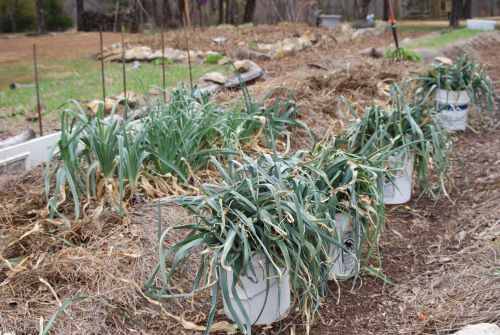
Buckets and buckets of leeks, and still more to pull. They'll stay in the garage until I can trim them.

 The temperature this morning was 25 degrees Fahrenheit. This followed Thursday's high of around 70 degrees F. For at least the next week the forecast calls for lows in the 20s, and at least one low in the teens.

So I've called it quits. The garden has been generous and I'm ready for a little hibernation. It was time to pull all the leeks and radishes, chop off the heads of cabbages and radicchio, and, finally, cut the lettuce and arugula. I even cut all the kale and cilantro. I spent three days doing all of this. The garden is done.

Cabbages

But I'm not. The cabbage roots are still in the ground, their large lower leaves splayed out. Eventually, I'll put them in the compost heap. Kale stems also still stand... perhaps if I leave them they'll come back in the spring? It's happened before.

The ground where the leeks grew must be smoothed and covered with hay, same with the bed that held the purple daikon radishes.

All of the beds need to be tidied. The plastic hoops that held up row cover and shade cloth stand uselessly in the ravaged garden and should be put away. 

Purple daikons and my not-bare foot.

I haven't even yet taken down the trellis that the long bean vines climbed, even though it's been at least a month since I pulled the vines.

Once the growing areas are tidied up and mulched with hay (if I can find any spoiled hay to buy for my mulch) I can move on to other projects.

For example, I had hoped to have dug all the unwelcomed plants from my little sweetgrass prairie last winter, as well as digging all the apothecary rose from the corner of the strawberry compound. -- I love the apothecary rose, but it needs better containment so it doesn't invade the strawberry beds. -- I started both projects last winter, but weather intervened. Then spring planting prevented me from making much headway. Of course, summer always brings its own busy-ness.

I did make a little headway, but all are far from done.

And the paths must be weeded, again, so my husband can lay fresh wood chips. The garden continues to beckon...

... and so does the kitchen. Both are crammed with the last of the harvest. Something must be done. We'll make cabbage curries and maybe some sauerkraut. I wound up with 21 heads out of the 30 plants I set in the ground. A few plants just didn't make it, and some just didn't make heads. For whatever reason, maybe the heat, the cabbages developed slowly, so they were all fairly small, but still lovely heads. Some are not much bigger than my fist and a few are smaller, more like giant brussels sprouts, but still dense and firm. 

Radicchio, Rossa de Verona.

More than a dozen heads of red and white radicchio made their way into my harvest basket. Not everyone likes this bitter relative of chicory, but I have learned to love bitter foods... they're really good for the digestion. I like to chop a little radicchio into salads. Vinegar and oil tames the bitterness -- at least my tastebuds think so. And I've found that I really like radicchio sauteed in ghee with leeks and carrots. It feels nourishing. 

And on and on... we even still have apples in the refrigerator drawers. Baked apples? More apple butter?

The garden has been laid to rest, even though I'm not getting much rest. And next year's garden is already growing. Last month I planted garlic. The rows are now marked with little green garlic shoots soaking up sunlight to make bulbs for me to dig next summer. The circle is unbroken.

Garlic!


Friday, November 4, 2022

Compost Happens


For the past few weeks -- maybe even the past couple of months -- I have been eyeing the compost piles, eager to stick a shovel in them.

Working compost might not seem like the most glamorous job in the garden, but I find it very satisfying.

Dead plant materials -- weeds, garden debris, kitchen scraps -- go into a heap, and plant nutrition comes out. Stuff that no longer serves, becomes something of value.

What happens is this:


Becomes this:   


In between the two, trillions and trillions of microscopic organisms -- mainly bacteria and fungi -- live, eat, excrete and die. They break it all down into essential parts by "eating" it (generally through chemical processes, not with teeth), and they excrete it into nutrients plants can use. The best compost is still alive when you apply it to the garden soil, where the microorganism populations shift to different species and set up shop, creating mutually beneficial relationships with the plants.

It's a magical, alchemical process that never ceases to amaze me.

While decomposition is a natural process that occurs without our intervention, we can enhance the process to make the highest quality product possible, as well as to speed up the process.

The most basic "recipe" for compost is to have the proper amounts of "browns" (carbon-containing materials) and "greens" (nitrogen-containing materials). All plant matter contains both carbon and nitrogen, but some contain a higher ratio of carbon to nitrogen and vice versa. The "best" way to build your compost pile is to layer the greens and browns, setting aside the carbon materials to scoop on top of your green materials (such as kitchen scraps) when you add them. Some plant materials, such as comfrey and yarrow enhance the decomposition process and improve the nutritional value of the compost.

All the official recipes aside, I simply pile stuff in the bin, then when enough is enough, I rebuild it, layering and watering as I can.

Composting requires living organisms that need water and oxygen. Dry decomposition does occur, but the end product has little value. Anaerobic (without oxygen) microbes also decompose things, but that gets smelly and doesn't produce top quality compost. The compost heap must remain damp -- not soggy, or that anaerobic process occurs -- and be "turned" occasionally to get air into the mix. Turning can be anything from chopping into the pile with a sharp spade, to digging everything out of the middle, pulling the edges into the middle and putting the stuff from the middle on the edges. Whew! That was a lot of work.

I simply rebuild my heaps in spring and fall and turn (the laziest way possible) whenever I think about it. 

I use a three bin composting system (working, cooking and finishing piles). The bins are made of old pallets, chicken wire, welded wire fencing and old baling twine. It's not pretty, except when the morning glories climb the walls (see morning glory photo at the top). However, the morning  glories are no longer allowed on the compost bins, because hundreds of seeds fall into the compost, so I have hundreds of morning glory seedlings everywhere I spread the compost. 

If you'd like more info on proper composting, follow this link to the K-State Resources and Extension publication on composting. The Internet also is full of people who are happy to tell you how to do composting "right," or their version of right.

However you do it, compost happens.